

 See My Latest Article on HelloNation
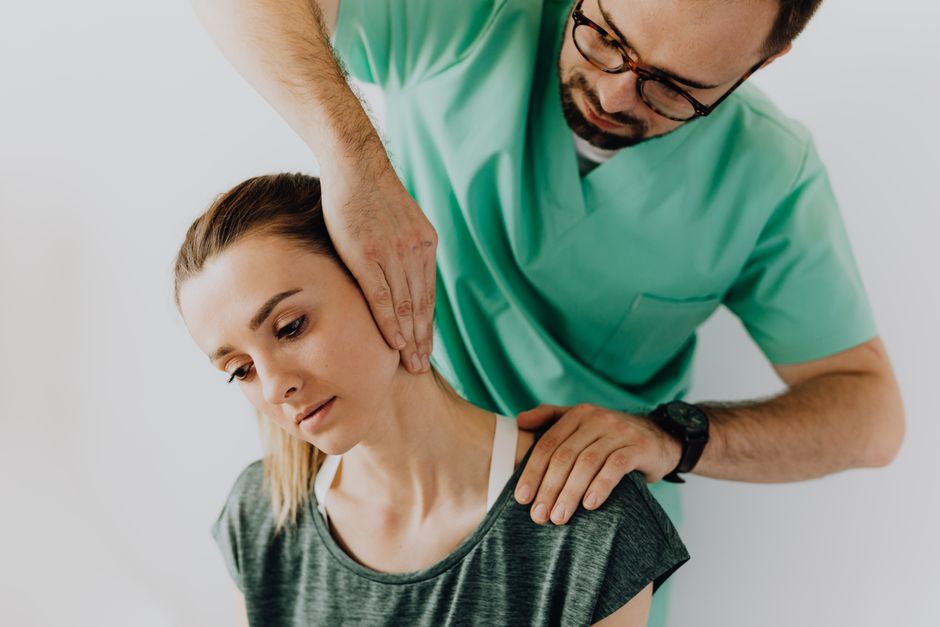
Chronic neck pain is discomfort or stiffness that lasts for about 12 weeks or longer, returns repeatedly, or continues despite initial self-care. In Ann Arbor, MI, it may affect people who work at computers, drive frequently, spend long periods reading or using phones, or experience seasonal strain from snow removal and cold-weather activities.
Chronic pain does not always mean that the neck is being damaged each day. It often reflects a combination of joint or disc changes, muscle tension, nerve sensitivity, movement habits, sleep quality, stress, and reduced physical conditioning.
What commonly causes chronic neck pain?
The neck contains seven vertebrae, discs, joints, muscles, ligaments, and nerves that work together to support the head and allow movement. Pain can come from one structure or several at once.
Common causes include:
- Muscle strain and persistent tension: Holding the head in one position, working at a poorly arranged desk, or repeatedly lifting can overload the neck and upper-back muscles.
- Age-related changes: Discs may lose height and flexibility over time, while small joints can develop arthritis. These changes are common, but they do not always cause symptoms.
- Cervical disc problems: A disc can bulge or herniate and irritate a nearby nerve.
- Cervical radiculopathy: Irritation or compression of a nerve may cause pain, tingling, numbness, or weakness traveling into the shoulder, arm, or hand.
- Prior injury: Whiplash, falls, sports injuries, or vehicle collisions can contribute to symptoms that persist after the original tissues have healed.
- Headache-related conditions: Pain from the upper neck can contribute to headaches that begin near the base of the skull.
- Less common medical conditions: Infection, inflammatory disease, fracture, cancer, or spinal cord compression can occasionally cause neck pain and require prompt evaluation.
A scan may show arthritis or disc changes in someone who has no pain. For that reason, test results need to be interpreted alongside symptoms and a physical examination.
How is chronic neck pain evaluated?
A careful history and neurologic examination are often more useful initially than immediate imaging. The evaluation usually considers where the pain is located, what worsens or relieves it, whether it travels into an arm, and how it affects sleep, work, driving, exercise, and daily activities.
A clinician may assess:
- Neck and shoulder movement
- Arm and hand strength
- Sensation and reflexes
- Balance, walking, and coordination
- Tenderness or muscle spasm
- Posture and movement patterns
- Symptoms of anxiety, poor sleep, or fear of movement that may be amplifying disability
X-rays may be considered when arthritis, instability, or a prior injury is suspected. Magnetic resonance imaging is more useful when symptoms persist, a nerve or spinal cord problem is suspected, or the examination shows concerning findings. Imaging is not automatically needed for every person with neck pain.
Keeping a brief pain and activity record can help identify patterns. Useful details include time spent at a computer, phone use, driving, sleep position, exercise, lifting, and whether symptoms include numbness or weakness.
What treatments help?
Management usually combines several approaches rather than relying on a single treatment. The goal is to reduce pain, restore movement, improve strength, and help a person return to normal activities.
Exercise and physical therapy
A tailored exercise program is one of the main treatments for persistent neck pain. It may include gentle range-of-motion work, strengthening of the deep neck and shoulder-blade muscles, upper-back conditioning, posture training, and aerobic activity.
The right level of exercise should challenge the body without causing a sustained flare. Mild temporary soreness can occur, but increasing arm weakness, spreading numbness, severe pain, or new balance problems should prompt reassessment.
Physical therapy may also address workstation setup, lifting mechanics, sleep positions, and ways to gradually resume activities that have been avoided.
Staying active without overloading the neck
Complete rest often leads to more stiffness and deconditioning. Short walks, light household activity, and frequent position changes are generally more helpful than remaining in bed.
For desk-based work, practical adjustments include:
- Keeping the monitor near eye level
- Supporting the forearms when possible
- Changing position regularly rather than trying to maintain a “perfect” posture
- Taking brief movement breaks during prolonged reading or screen use
- Avoiding extended phone use with the head bent forward
During winter, sudden lifting of wet snow, repeated overhead reaching, and prolonged driving while tense can aggravate symptoms. Warming up, using manageable loads, and alternating tasks may reduce strain.
Medication and symptom relief
Over-the-counter medicines such as acetaminophen or anti-inflammatory drugs may help some people, but they are not appropriate for everyone. Kidney disease, ulcers, blood-thinning medication, liver disease, pregnancy, heart conditions, and interactions with other medicines can affect which options are safe.
Heat may relax tight muscles, while cold can be useful after an activity-related flare. Neither should be applied long enough to injure the skin. A soft cervical collar may provide short-term comfort in selected situations, but prolonged use can weaken supporting muscles and increase stiffness.
Injections and other procedures
For pain associated with a specific irritated nerve or facet joint, injections may sometimes provide temporary relief or help clarify the pain source. These procedures require an individualized discussion of potential benefits and risks.
Radiofrequency treatment may be considered for selected facet-joint pain after diagnostic testing suggests that the joint is contributing to symptoms. It is not a general treatment for every type of neck pain.
Surgery is usually reserved for spinal cord compression, progressive neurologic problems, or selected cases of persistent nerve compression that have not improved with nonsurgical care. Neck pain alone, without evidence of nerve or spinal cord involvement, does not automatically mean surgery is needed.
What role does Physical Medicine and Rehabilitation play?
A Physical Medicine and Rehabilitation physician, also called a physiatrist, evaluates how pain affects movement, strength, work, sleep, and independence. PM&R care often emphasizes nonsurgical treatment and coordination among physical therapy, medication management, exercise planning, behavioral strategies, and procedures when appropriate.
This approach can be useful when the cause is not obvious, symptoms have lasted for months, imaging findings do not match the level of pain, or neck symptoms interfere with everyday function. The focus is not only on reducing pain but also on helping a person safely do more.
Stress and poor sleep do not mean the pain is imaginary. They can increase muscle tension, reduce pain tolerance, and slow recovery. Addressing sleep habits, stress, mood, and fear of movement is a legitimate part of rehabilitation.
Which warning signs need prompt medical attention?
Seek urgent evaluation for neck pain accompanied by:
- New or worsening weakness in an arm, hand, leg, or foot
- Trouble walking, loss of balance, or clumsy hands
- Loss of bladder or bowel control
- Severe pain after a fall, collision, or other injury
- Fever with marked neck stiffness or severe headache
- Unexplained weight loss, a history of cancer, or immune suppression
- Difficulty breathing or swallowing
- Severe headache, fainting, chest discomfort, sweating, or pain spreading to the jaw or arm
Even without these warning signs, persistent numbness, tingling, night pain, or pain that continues despite several weeks of sensible self-care deserves medical evaluation.
What can residents expect from recovery?
Recovery is often gradual rather than linear. Symptoms may improve, flare after an unfamiliar activity, and settle again as strength and tolerance develop. A useful plan typically measures progress by function: turning the head more comfortably, sleeping better, driving safely, working with fewer breaks, or returning to exercise.
The most effective long-term approach is usually consistent movement, targeted strengthening, thoughtful activity changes, and periodic reassessment when symptoms change. A diagnosis should guide that plan, but treatment should also reflect the person’s goals, daily demands, and ability to participate in rehabilitation.